
 Book Appointment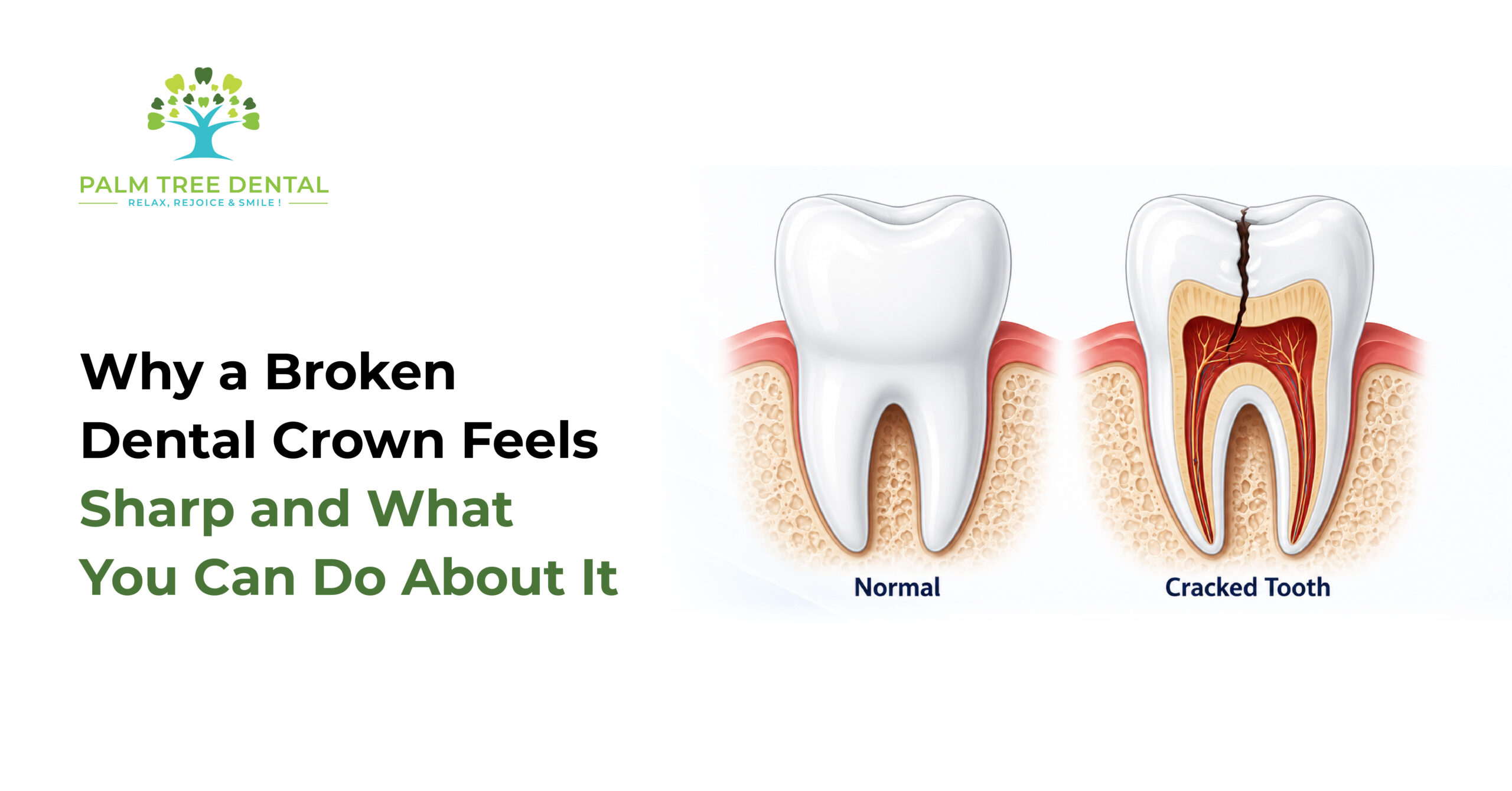
If you had no trouble with a dental crown before, it can be surprising to feel something sharp inside your mouth all of a sudden. It may startle you since there was no pain earlier. But once you notice the roughness of the edge, it can cause some anxiety, especially if you have concerns about eating and talking comfortably without getting a painful bite in the cheek or tongue. Nevertheless, this is actually a rather frequent problem, which can easily be handled. And when you learn why the crown feels sharp and how to fix the problem, you’ll be able to act correctly.
Why Would You Feel the Rough Edge of a Crown?
It might sound odd, but a smooth dental crown doesn’t mean that its entire surface is perfectly even. The crown itself is made of materials such as porcelain, ceramic, or precious metals. But if a crown starts breaking and cracking, then the surface becomes irregular and rough.
Here’s what we mean by saying that the crown can feel sharp inside the mouth:
- The inner layers aren’t polished. As a result, sharp or protruding fragments of the restoration become evident.
- Fragments can remain after a chip in the crown, creating an uneven surface.
- Your tongue and cheeks constantly rub against those rough areas, causing irritation and small cuts in tissues.
Possible Reasons for Crown Fractures
A variety of factors can lead to fractures in crowns. Here are some examples:
- Excessive pressure when biting something hard.
- Grinding teeth in the course of sleeping.
- Injury of the oral cavity.
- Natural wearing down over years of use.
- Decay under the crown.
While crowns are meant to shield and preserve teeth, they aren’t immune to damage and injuries. Even though dentists use high quality materials, crowns can become damaged when under too much pressure.
Immediate Actions
When noticing a broken crown, here are several actions you should take:
- Avoid chewing on this side to minimize additional pressure on the crown.
- Gargle with lukewarm saline water to reduce irritation.
- If the edge is very sharp, you can cover the area temporarily with dental wax.
- Do not try to smooth the surface yourself, since this could hurt.
- If there’s pain, you can take over the counter pain relievers. And most importantly, contact your dentist as soon as possible.
Possible Treatments
After visiting the clinic, the dentist will look at the crown thoroughly and consider possible options:
- For minor cracks, they may sand off any rough edges.
- When there’s a bigger crack, then the crown will require repair or replacement.
- Sometimes, dentists also need to examine the underlying tooth. There could be decay underneath the crown, or the cement could have weakened.
- While a cracked dental crown isn’t usually considered an emergency, postponing treatment isn’t advisable either. Without proper measures, infections can develop.
Why Timely Assistance Is Necessary?
Rough edges of a crown don’t smooth over time and keep irritating soft tissues. Besides, a gap allows bacteria to enter and start developing infections.
Therefore, fixing a damaged crown right away prevents complications in the future.
As you probably know, life is quite hectic, but you shouldn’t postpone treatment just because of that.
Conclusion
A rough edge of a broken dental crown means that it started breaking down and reveals some sharp parts. While this may feel uncomfortable, you don’t have anything to worry about, since it can be fixed.
Taking immediate action and consulting the specialist will help preserve your smile and eliminate any risks.
Are you facing similar problems? Palm Tree Dental is ready to perform thorough evaluations and offer excellent crown repair services. Contact us today!