
 Book Appointment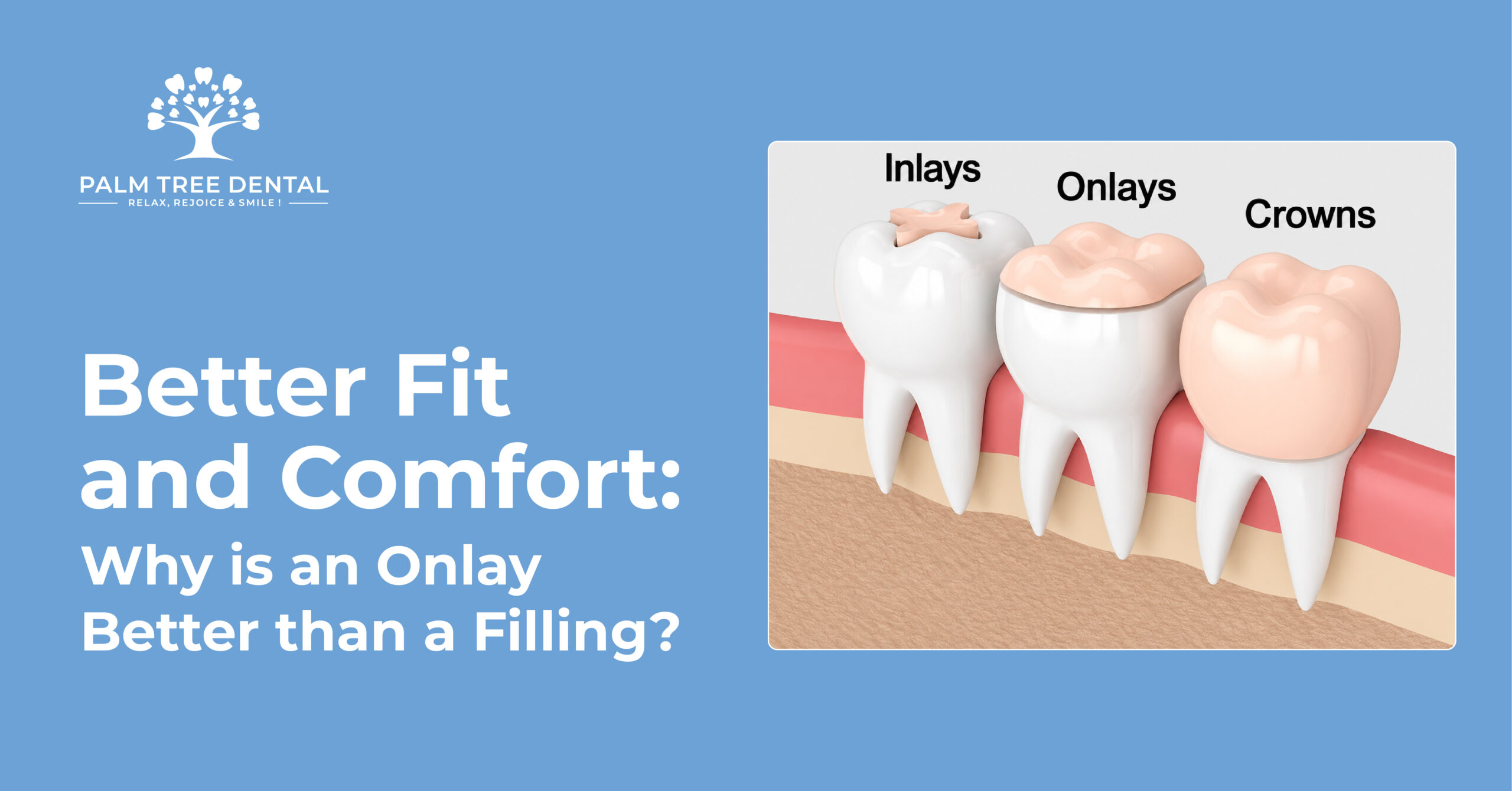
Ever wondered why your dentist might suggest an onlay instead of a regular filling? Here’s the scoop. If you have a damaged tooth or a large cavity, you are looking for a solution that is comfortable, durable and protective of what is still healthy. We get it, dental decisions can be confusing. You hear words like filling, crown and onlay and it is difficult to know what really makes a difference.
Here’s the idea in a nutshell. The right restoration should do more than fix the problem. And it should keep your smile protected for years to come. That is where onlays are often visible.
Perfect Fit for Comfort
Imagine it for a moment. A filling is shaped by hand and placed directly into your tooth during your appointment. It works very well for small cavities. But an onlay is different. It’s custom made in a dental lab from detailed impressions of your tooth. This means that it is shaped to fit the exact shape and curves of your tooth.
In layman’s terms, this means a better fit. When your bite is right, you have less pressure and less sensitivity. Many patients say their tooth feels more natural with an onlay because it fits in perfectly with the rest of the tooth. And here’s the best bit. The dentist adjusts it just so and cements it in place. Everything feels right.
Enhanced Durability and Longevity
Let’s talk about the longevity of your restoration. In the past, fillings would last between five and ten years. With proper care, onlays can last 15 years or more.
Imagine this. Onlays are used to distribute chewing forces more evenly over the tooth. They support the tooth and help prevent cracks, rather than stressing a small area. Here is where it gets exciting. Fewer replacements equal fewer appointments and fewer surprise costs later on. Long story short, this is good if you want something strong and dependable.
Preservation of Natural Tooth Structure
When damage is moderate to severe, dentists have options. A large filling can weaken the tooth. A full crown is a lot of healthy enamel we have to remove. Onlays are comfortably in the middle.
That’s the idea in a nutshell. They cover and protect the damaged area while saving as much of the natural tooth as possible. That counts. The more natural structure you maintain, the longer your tooth stays strong. It is a conservative approach to both function and to future oral health.
Increased Resistance to Decay
The seal is another big plus. Fillings can shrink or expand slightly over time, which can create tiny gaps. Bacteria can get in and start new decay under there.
Onlays are bonded tightly to the tooth, ensuring a tight seal. Here is the whole thing. A better seal means less opportunity for bacteria to get in. Which translates to better protection and more peace of mind.
Artistic Excellence
And let’s not forget looks. Modern day onlays are made of materials like porcelain or composite resin that match the natural color of your teeth. They look better than the old metal fillings anyway.
Want to know more? Many patients love how their restoration is nearly invisible, yet very strong.
Choosing Rightly
Fillings still work well, for small cavities, but onlays often make more sense, when damage extends out over a larger area, or to the cusps of the tooth. And that’s what you should know. When the case calls for it, onlays provide better fit, comfort, durability and protection.
If you want a restoration that looks natural, lasts longer and protects your smile, it’s worth a try. At Palm Tree Dental, we focus on individualized care and long term comfort.