
 Book Appointment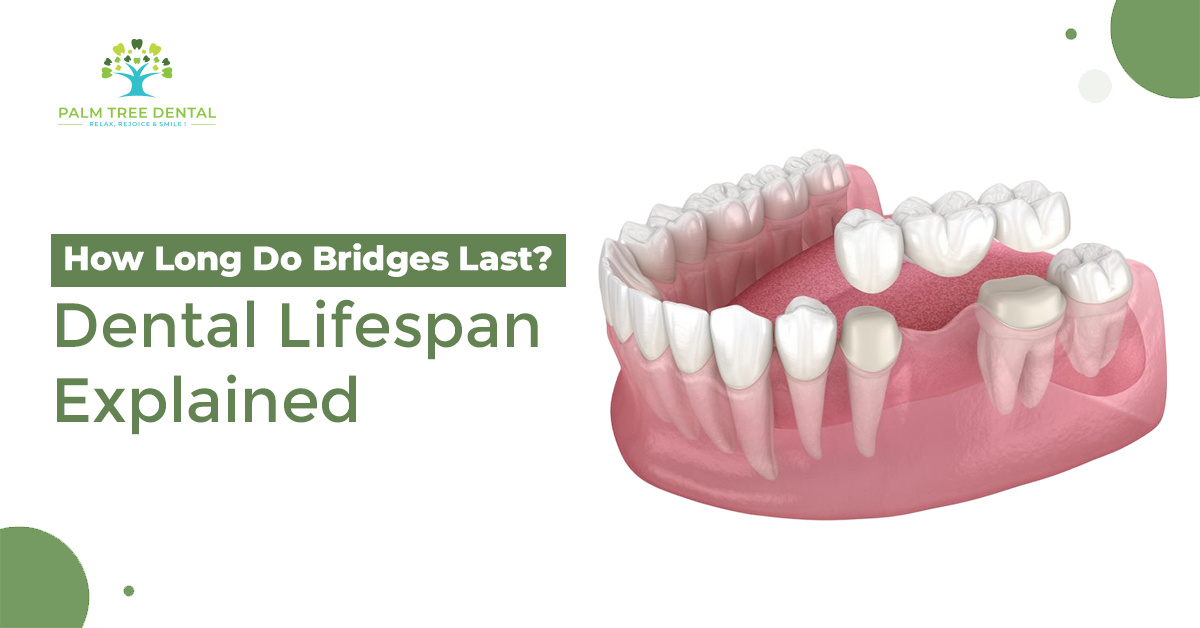
Dental bridges are a common and efficient solution for replacing missing teeth, restoring both function and aesthetics to a patient’s smile. For those seeking expert advice and care, Palm Tree Dental, a trusted Dental Clinic in Ingleside, TX, can provide personalized recommendations and maintenance tips to maximize the longevity of dental bridges.
What Is a Dental Bridge?
By securing prosthetic teeth to nearby natural teeth or dental implants, a dental bridge is a permanent dental treatment that can replace one or more lost teeth. Bridges keep the remaining teeth from moving out of place, preserve facial structure and improve speaking and chewing ability. Traditional, cantilever, Maryland and implant-supported bridges are among the various varieties of dental bridges, each with unique benefits and the most appropriate applications.
Average Dental Bridge Lifespan
Dental bridges typically last five to fifteen years. Many bridges can endure even longer—up to 20 years or more—with good oral hygiene and routine dental exams. The type of bridge, the materials used, the patient’s oral hygiene practices, and the skill of the dentist all affect how long the bridge will last in reality.
Factors Influencing Dental Bridge Lifespan
Material Quality
All ceramic, all metal alloys, and porcelain fused to metal are some of the materials that can be utilized to create dental bridges. While metal-based bridges are extremely robust, porcelain and ceramic bridges have a more natural appearance but may be more likely to chip. The lifetime of the bridge can be greatly impacted by the material selection.
Practices of Oral Hygiene
Maintaining good oral hygiene is essential to a dental bridge’s lifespan. Gum disease and decay surrounding the supporting teeth can be avoided by using an antiseptic mouthwash, brushing twice a day, and flossing – especially under the bridge. Ignoring dental care can result in issues that reduce the bridge’s longevity.
Frequent Dental Examinations
At Palm Tree Dental in Ingleside, TX, routine examinations enable the early identification of possible problems, including decay, gum disease, or loosened bridges. Timely interventions and expert cleanings can prevent small issues from growing into serious ones.
Lifestyle and Diet
A dental bridge can be harmed by biting on ice, chewing hard meals, or using teeth as instruments. Also, smoking and eating too many sweet foods raise the risk of gum disease and decay, which can weaken the bridge.
Foundational Dental Health
The lifetime of a dental bridge is significantly influenced by the condition of the gums and supporting teeth. The bridge may fail too soon if the abutment teeth that support it develop cavities or gum disease.
How to Make Your Dental Bridge More Lasting
- Do not chew on hard items.
- See your dentist on a regular basis for examinations and cleanings.
- Take care of any tooth problems as soon as possible and follow your dentist’s care recommendations.
Conclusion
When properly maintained, a dental bridge can last anywhere from five to fifteen years or longer, making it a dependable and durable solution for missing teeth. The longevity of your bridge is greatly influenced by your oral hygiene practices, frequent dental checkups, and the skill of your dentist.
For expert care and long-lasting results, you can rely on Palm Tree Dental in Ingleside, TX, for individualized treatment and knowledgeable guidance to help you keep a confident, healthy smile for many years to come.